News · Platform
DeepSeek funding does not change US agency removal order
TechCrunch reports a DeepSeek fundraise after a federal removal order. The reports address different questions: financing and use on agency IT systems.
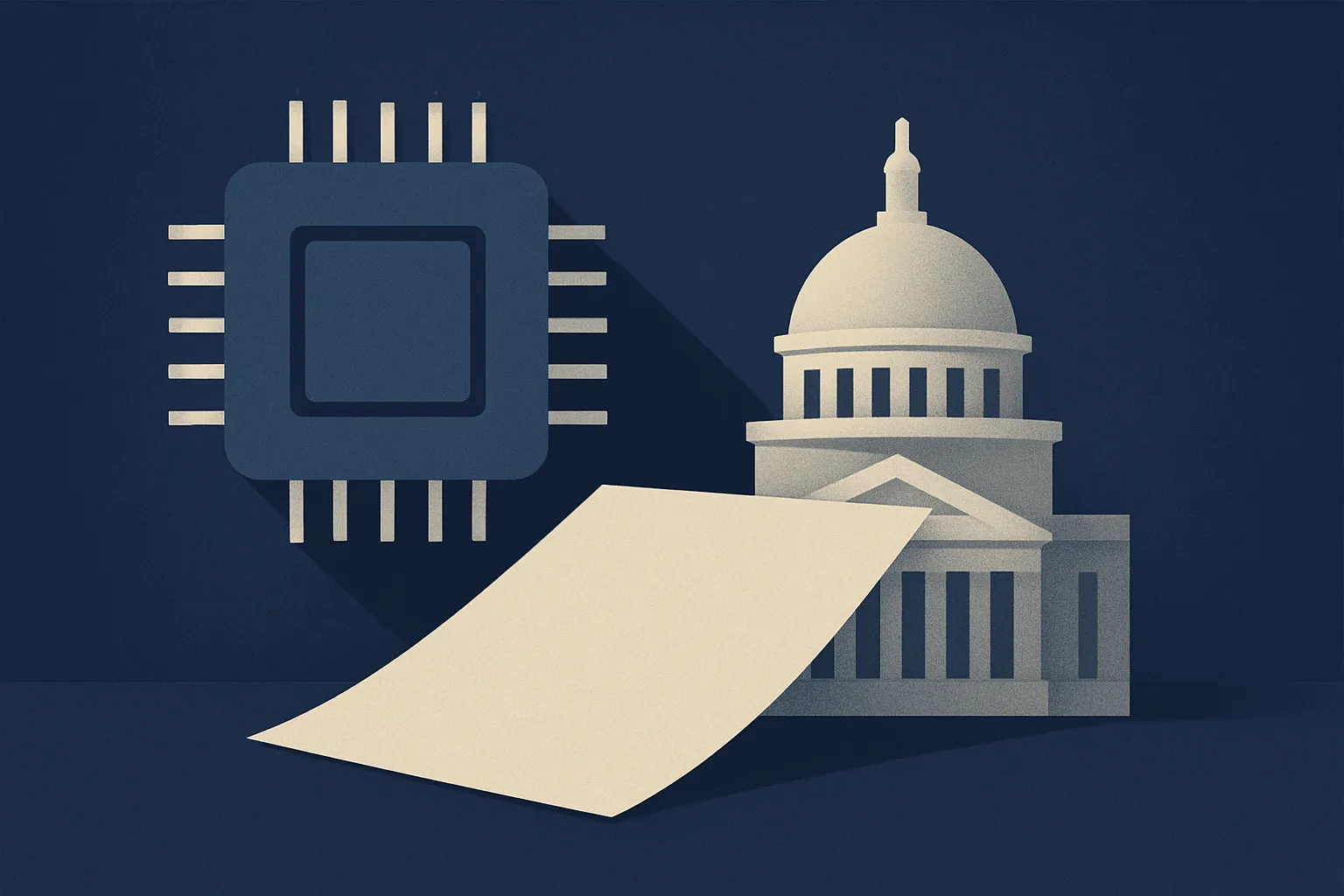
TechCrunch reports that DeepSeek has reportedly raised $15 billion, days after the US ordered federal agencies to remove its technology. The funding was reported by CNBC and TechCrunch. The juxtaposition does not describe a policy reversal: the reported fundraise and the removal order address different things, namely DeepSeek’s financing and the use of its technology on government IT systems.
That distinction matters for people responsible for software in federal civilian agencies. A large reported round does not answer whether a service is permitted on an agency system, and the removal order does not settle the terms or status of the reported funding. The useful reading of the coverage is therefore narrower than either headline alone: funding news and deployment restrictions can move at the same time.
The reports describe adjacent events
TechCrunch’s October 22 report calls the funding a reported $15 billion raise and places it days after the US action against DeepSeek technology. “Reportedly” is doing important work here. The supplied summary does not identify investors, a valuation, the terms of the round or how the money would be used, so none of those details can be inferred from the headline amount.
The preceding policy action is clearer about its target, if not every implementation detail. On October 20, TechCrunch reported that the US ordered federal civilian agencies to remove DeepSeek products and third-party services built using its technology, citing national security concerns. CNBC separately reported that the Department of Homeland Security had banned DeepSeek-related technology from federal civilian agency IT systems.
Those accounts agree on the central operational point: the action concerns federal civilian agency systems. Their descriptions also show why a simplistic reading would be risky. TechCrunch explicitly calls out third-party services built with DeepSeek technology, while CNBC describes the scope as DeepSeek-related technology. Neither supplied summary provides a timetable, exceptions or a method for determining whether a particular service falls inside the order.
Scope matters more than the funding headline
For an agency IT or procurement team, the immediate question is not whether the reported raise validates DeepSeek’s technology. It is whether a product, integration or external service on an agency system uses DeepSeek technology in a way covered by the order. TechCrunch’s reference to direct products as well as third-party services makes the provenance of a service relevant, rather than merely its brand name.
That creates a practical difference between a direct deployment and a dependency inside another product. The supplied reporting does not say which services are affected, how agencies should identify them or what removal looks like in a particular environment. But it does give a reason not to stop an assessment at a vendor inventory: a service built using DeepSeek technology is part of TechCrunch’s description of the federal order.
This is also where the reports set a boundary on the story. CNBC and TechCrunch describe action concerning federal civilian agency IT systems. Neither account describes a restriction on every private organisation in the United States, nor do they establish what a non-federal organisation must do. Extending the order beyond the scope reported would be an overclaim.
A fundraise is not clearance
The reported funding should not be read as a change in the stated federal action. TechCrunch reports the raise after the removal order; it does not report that the order has been withdrawn, narrowed or superseded. CNBC’s account similarly describes a Department of Homeland Security ban on DeepSeek-related technology in federal civilian agency IT systems, not a policy that turns on the company’s funding status.
The reports also do not establish a technical verdict. TechCrunch says the US cited national security concerns, but the supplied material contains no test results, technical findings or assessment that would let a reader judge the underlying technology. A funding headline cannot fill that gap, and neither can a restriction aimed at agency systems.
Keeping those claims separate avoids opposite errors. The federal action is not evidence in this material that DeepSeek cannot raise money. The reported raise is not evidence in this material that agency restrictions no longer apply. Each report answers a different question, and neither resolves the other.
The missing details are the decision-critical ones
The supplied summaries leave important questions unanswered. They do not state the investors or terms in the reported funding round. They also do not say how federal civilian agencies will identify DeepSeek-related technology, how they will treat third-party services, or whether the relevant order has specific implementation exceptions.
Those are not incidental omissions for the people affected by the coverage. A federal agency technology lead needs the scope and implementation terms of the order; a reader assessing the funding report needs the terms and status of the round. The $15 billion figure is significant as a reportable event, but it is not a substitute for either set of details.
For now, the durable conclusion is modest. TechCrunch reports that DeepSeek has raised money, while CNBC and TechCrunch report a US restriction affecting federal civilian agency systems. Treat the first as financing news and the second as an IT-use and dependency question. Conflating them produces more certainty than the reporting supports.
- deepseek
- federal agencies
- us government
- ai policy
- national security
Questions
How much did DeepSeek reportedly raise?
TechCrunch reports that DeepSeek has reportedly raised $15 billion. Its report says the funding came days after the US ordered federal agencies to remove DeepSeek technology, and its corroboration record says CNBC also reported the fundraise.
Which systems does the reported US order affect?
CNBC reports that the Department of Homeland Security banned DeepSeek-related technology from federal civilian agency IT systems. TechCrunch reports that the order covers DeepSeek products and third-party services built using its technology.
Does the reported fundraise lift the federal removal order?
No supplied report says that the reported fundraise changes the federal removal order. The coverage presents a financing event and a restriction on federal civilian agency IT systems as separate developments.
Sources
Every page this piece was written from.
About the author
odnoga Team
The odnoga team writes about artificial intelligence for the people who build with it: what shipped, what the research actually found, and what it means for the week ahead. Every piece names its sources.
More from this section
- Alignment monitoring is more than a safety check · 22 October 2026
- Mistral Large 4 total and active parameters explained · 9 October 2026
- ChatGPT’s EU watermark makes editing the key test · 6 October 2026
- Gemini in cars is getting access to Gmail and Photos · 21 October 2026
Putting AI into your own app?
odnoga is the AI gateway for apps built on Lovable and Supabase: one API for every model, with usage, limits and billing per user.
 Built your app with Lovable?
Attribute every AI request to the user who made it, cap their spend and bill them for it, with one prompt pasted into Lovable.
AI billing for Lovable apps Running on Supabase?
Call any model from your Edge Functions with the Supabase user attached: metered, budgeted and traced per user, without a package to install.
The AI gateway for Supabase